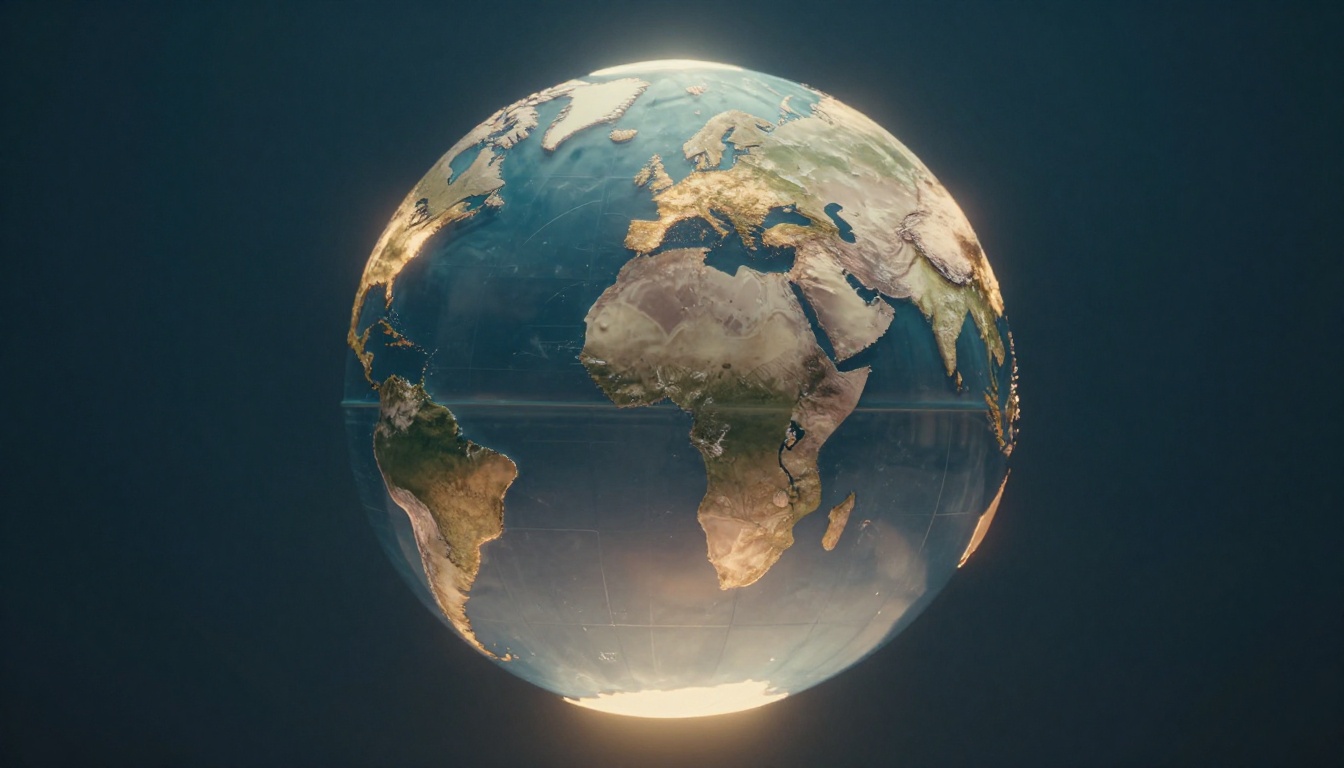
Asia houses more than half of all people on Earth, about 4.85 billion as of 2026. That’s over 60% of the world’s 8.3 billion folks squeezed into one massive landmass. Meanwhile, Antarctica sits empty of permanent residents, with only temporary researchers braving the ice.
You run into these terms daily, whether scanning news headlines, planning a trip, or chatting trivia. Knowing continents helps picture where stories unfold. Countries pin down nations with their own rules. Regions group them for bigger patterns like trade or growth.
This post breaks it down simply. First, we cover the seven continents and their key stats. Next, we define countries and count them at 195. Then, we explore UN regions for smart grouping. Finally, grab tips to remember it all. Ready to make the world map click in your mind? Let’s start with the basics of continents.
Unlock the Seven Continents and Their Standout Features
Continents form the biggest land chunks on Earth. Oceans mostly separate them. Culture and geology also draw lines. Most folks use the seven-continent model: Asia, Africa, Europe, North America, South America, Antarctica, and Australia or Oceania.
Some combine Europe and Asia into Eurasia. That makes six. Schools and maps stick to seven, though. It keeps things clear. Populations and sizes tell standout stories. Asia leads with 4,850 million people across 44.6 million square kilometers. Africa follows at 1,519 million and 30.4 million square kilometers.
Here’s a quick table of 2026 figures for all seven:
| Continent | Population (millions) | Land Area (million km²) |
|---|---|---|
| Asia | 4,850 | 44.6 |
| Africa | 1,519 | 30.4 |
| Europe | 743 | 22.1 |
| North America | 517 | 24.7 |
| South America | 672 | 17.8 |
| Oceania | 58 | 8.5 |
| Antarctica | ~1 (researchers) | 14.0 |
This setup shows Asia’s dominance. Africa grows fastest. Antarctica chills alone. For full 2026 breakdowns, check Population by Continent 2026.
Each continent pulls you in with unique pulls. Asia buzzes with cities and economies. Africa surges in numbers and resources. Europe packs history into tight spaces.
Spotting Asia, Africa, and Europe’s Massive Scale
Asia dwarfs others in people and space. Its 4.85 billion residents span from Japan to India. Economies like China and India drive global trade. Crowded streets in Tokyo mix with vast deserts.
Africa matches Asia in size at 30.4 million square kilometers. Yet its 1.519 billion people grow quickest, up 2.27% yearly. Nations like Nigeria boom. Resources fuel its rise.
Europe squeezes 743 million into 22.1 million square kilometers. History shapes it, from ancient Rome to modern unions. Dense cities like Paris thrive. Stable numbers contrast Africa’s boom.
These three hold over 80% of humanity. They shape news on growth and power. You see their scale in daily headlines.
From North America to Antarctica: The Rest of the Bunch
North America spans 24.7 million square kilometers with 517 million people. The U.S., Canada, and Mexico lead. Vast plains meet mountains.
South America covers 17.8 million square kilometers and 672 million residents. Brazil dominates. Rainforests and Andes add drama.
Oceania spreads 58 million across 8.5 million square kilometers, mostly islands. Australia anchors it. Low density means big skies.
Antarctica claims 14 million square kilometers but zero permanent folks. Researchers rotate in. Ice sheets cover 98% of it.
These smaller ones offer variety. Islands dot Oceania. Ice defines the south pole. Together, they round out the seven.
Figure Out What Counts as a Country and Tally Them Up
A country runs its own show. It needs a government, permanent people, clear borders, and ties to others. Think of it as a neighborhood that manages itself, talks to neighbors, and stays put.
The Montevideo Convention spells this out from 1933. It lists four must-haves. No one handed-down rule fits all, but this guides most.
As of March 2026, count 195 sovereign countries. That includes 193 UN members plus observers like Vatican City and Palestine. Taiwan and Kosovo spark debates. Some lists hit 197. UN sticks to 193 core plus two.
Counts shift rarely. Splits or merges cause bumps. Right now, steady at 195 works for most maps.
The Key Traits Every Country Needs
First, a permanent population. Classmates fill a school. Empty playgrounds don’t count.
Second, defined territory. Fences mark playground edges. Borders do the same, even if fuzzy.
Third, government. A principal runs the school. Leaders make and enforce rules inside.
Fourth, capacity for relations. Teams play sports with rivals. Countries sign deals and chat.
Miss one, and it’s not fully a country. Greenland has people and land but ties close to Denmark. It lacks full independence.
These traits keep definitions simple. They match real-world examples.
Why 195 and Not More or Less
The UN holds the standard. Its 193 members vote on big issues. Observers like Palestine join talks but skip votes.
No adds or drops since South Sudan in 2011. Check UN member states list for the full roll.
Edge cases like Taiwan trade widely but lack UN seats. Politics muddies counts. Stick to 195 for basics.
Master World Regions Through the UN’s Smart Breakdown
Regions group countries beyond continents. The UN uses five macro areas: Africa, Americas, Asia, Europe, and Oceania. Subregions slice finer, like Western Africa or Caribbean.
This setup aids stats and aid. It tracks trade flows too. Unlike cultural tags like Middle East, UN focuses on geography.
Regions overlap continents. All African nations fall under one macro. Asia splits into Eastern and Western for logic.
World Bank tweaks it sometimes. UN’s stays neutral. See the UN geoscheme details for maps.
UN’s Five Main Regions and Their Subgroups
Africa covers 54 countries. Subgroups include Northern (Morocco), Western (Nigeria), Eastern (Kenya), Middle (Sudan), and Southern (South Africa).
Americas span North (USA), Central (Panama), South (Brazil), and Caribbean (Jamaica).
Asia groups Eastern (China), Southern (India), South-Eastern (Indonesia), Western (Saudi Arabia), and Central (Kazakhstan).
Europe divides Northern (Sweden), Western (France), Southern (Italy), and Eastern (Russia).
Oceania includes Australia, New Zealand, Melanesia, Micronesia, and Polynesia.
These 22 subregions total 248 spots, including territories.
Why Regions Help You See Global Patterns
Regions spot trends fast. Africa leads population growth. Americas drive trade.
Culture clusters emerge, like Caribbean vibes. News makes sense quicker. A drought in Eastern Africa hits one subgroup.
Groupings predict shifts. Trade blocs form within. You grasp global flows better.
Simple Steps to Remember Continents, Countries, and Regions Easily
Start with maps. Google Earth zooms continents quick. Note sizes and pops from the table above.
Group by UN regions. Learn five macros first. Tackle one subregion daily.
Quiz yourself. Sites like Worldometer test countries. Aim for 10 per region weekly.
Track overlaps. Russia spans Europe-Asia. Islands shift Oceania counts.
Focus populations. Big numbers like Asia’s 4.85 billion stick. Changes grab attention via UN updates.
Build slow. One continent per day works. Fun beats cram sessions.
Daily Habits and Tools That Stick
Use free apps like GeoGuessr. Flashcards list capitals by region.
Practice five countries daily per macro. Apps track progress.
Maps on walls remind you. Podcasts cover news by region.
Population focus keeps it real. Africa’s rise matters now.
These habits lock it in. Review weekly for wins.
Knowing continents pins the big landmasses. Seven cover Earth, led by Asia’s billions. Countries total 195, defined by government, people, borders, and ties.
UN regions group them smartly into five macros and 22 subs. They reveal patterns in growth and trade.
Grab a map today. Quiz a friend on Oceania’s islands. This boosts travel plans, news savvy, and trivia chats.
What’s your favorite continent? Share in comments. Dive deeper and own the world map.